
Cellular Agriculture Canada (CAC)
A coalition of diverse key players across Canada building the future of cellular agriculture.
2019 - Ongoing
A net-zero economy, value-added agriculture, economic diversification, and climate resiliency.
These are all possible with cellular agriculture.
CELLULAR AGRICULTURE CANADA (CAC)
Overview
Cellular Agriculture Canada is an initiative led by New Harvest Canada to collaboratively advance Canada’s cellular agriculture ecosystem. In May 2023, 34 individuals from 30 different organizations across the Canadian cellular agriculture ecosystem came together to strategize their collective future. The group discussed key opportunities and challenges facing cellular agriculture’s progress in Canada, what success could look like in a five-year and twenty-year time horizon and some critical collective actions to pursue in the near future, including the creation of a public-facing collective entity to represent the ecosystem. This initiative now unites key players from industry, government, non-profits, academia, and more, to address the challenges, and tap into opportunities to advance Canadian leadership and progress in cellular agriculture.
CAC was created to convene and steer Canada’s cellular agriculture ecosystem towards growth, sustainability and global leadership.
Our Mandate
We believe Canada can capitalize on the global movement to achieve a net-zero economy by leveraging its strengths in the emerging field of cellular agriculture. This will help Canada not only to maintain its leading position as a producer and exporter of agricultural products but also to tap into new areas of value-added agricultural biomanufacturing. To capture this opportunity, innovators, start-ups and established companies along the supply chain, as well as government, researchers, academic institutions, and non-profit organizations, need to come together to address the challenges and expand on the opportunities to ensure Canada becomes a global leader in the cellular agriculture space.
CAC will advance this mandate by pursuing the following six action areas:

Cultured fish - CELL AG TECH
Animal-free dairy - Opalia

CELLULAR AGRICULTURE CANADA (CAC)
Action Areas
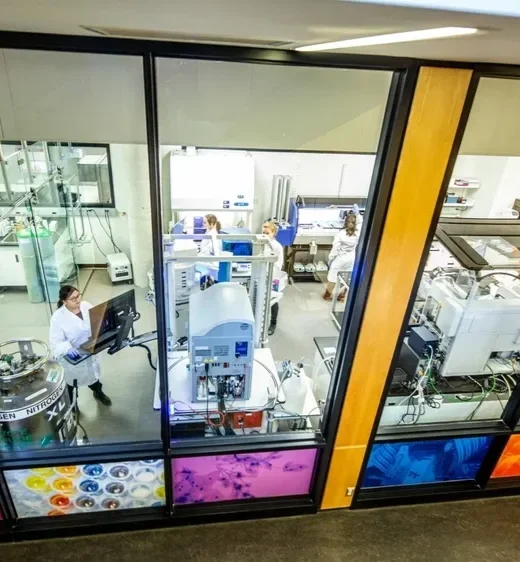
Courtesy: © Concordia University, photo by Marc Bourcier
-
Canada holds all the cards to lead and grow in cellular agriculture. However, due to its multidisciplinary nature, it will require coordination and alignment of vision across diverse sectors such as agriculture, innovation, biotech, education, and more.
A blueprint for success - identifying and outlining our existing Canadian assets: resources, infrastructure, talent - and how they must come together to achieve leadership and success is a necessary first step in seizing the opportunity and communicating its potential to a wide range of stakeholders.
-
We have seen it time and time again: cellular agriculture has no clear home. With aspects of the technology which touch agriculture and biomedical engineering, cellular agriculture is often at the intersection of existing disciplines, jurisdictions, and government mandates.
Policymaking touches all aspects of cellular agriculture, from funding to drive research and innovation, to environmental policy that prioritizes and incentivizes sustainability, to regulatory policy to ensure health and safety.
In a new field such as this one, the path forward is ongoing policy engagement: connecting researchers and practitioners with policymakers and regulators in sustained collaboration, enabling improved policymaking by making the most of shared evidence, expertise, and experience.
-
Canada fosters a culture of collaboration which can be well-leveraged for cellular agriculture.
Given the interconnection, intensive R&D, and high costs to scale-up of this technology, collaboration and coordination across sectors and disciplines, from training and R&D to scale-up and manufacturing, is necessary.
Cellular Agriculture Canada will serve as a platform to foster and drive collective progress and an open, collaborative ethos across the entire innovation pipeline and across the country. This will be especially relevant for innovators that are entering the space and do not have established relationships. The more we can strengthen relationships, capture new opportunities and enable greater working relationships among players, the sooner we can achieve success.
-
Ensuring sufficient financial support for all aspects of the innovation pipeline, such as training, pre-competitive R&D, scale-up biomanufacturing, and commercialization, is crucial for the success of an ecosystem like cellular agriculture. While there are nonprofit organizations dedicated to acquiring government funds for the broader food technology landscape, there is currently no exclusive focus on cellular agriculture technologies. CAC’s primary objective is to actively facilitate and attract government, philanthropic, and investment funding into the Canadian cellular agriculture ecosystem. Through fostering collaborations and partnerships within and beyond our coalition, we aim to create opportunities for both national and global investments, driving the growth and advancement of this transformative industry.
-
While the conversation around cellular agriculture has evolved throughout the years, there is still a lack of awareness of the significant economic opportunity it represents to Canadians. Ensuring the buy-in from the general public and that they are knowledgeable and excited about cellular agriculture and its potential is essential to achieve success.
Cellular Agriculture Canada will serve as a promoter of transparency, openness and knowledge sharing since we recognize the critical role they play from the early stages of the innovation process all the way to the commercialization of novel products.
Through strategic communications roadmaps, we will prioritize outreach and science communication, offering knowledge to build trust and dispel any potential misinformation. Our aim is to foster a supportive environment where accurate information prevails, enabling wider acceptance and understanding of cellular agriculture's benefits.
-
Canada boasts world-leading universities and institutes renowned for producing top-tier talent. We understand the crucial role a skilled and knowledgeable workforce plays in propelling the emerging cellular agriculture industry forward.
Coordination and alignment between innovators, companies and educational institutions at all levels (e.g. colleges, polytechnics, universities) will ensure we build an inclusive and diverse talent pipeline of aspiring professionals with the expertise needed in this cutting-edge field. Cellular Agriculture Canada will provide a forum for collaboration to ensure curricula are developed in line with the needs of the industry, which will benefit both future professionals and employers.
We will thus establish a purpose-built talent pipeline and forge partnerships with educational institutions, industry leaders and training organizations. We aim to develop specialized programs and curricula to equip aspiring professionals with the expertise needed in this cutting-edge field. By nurturing and empowering the next generation of cellular agriculture experts, we aspire to build a strong workforce of qualified individuals who will drive growth and innovation in the sector.
Cellular Agriculture Prairies Ecosystem (CAPE)
Funders
CAPE is a public-private partnership supported by diverse funders: Prairies Economic Development (PrairiesCan), Alberta Innovates, Mitacs, and New Harvest’s philanthropic donors.
Contact
If you have questions or would like to get in touch regarding CAPE, please contact Miranda Stahn at miranda@new-harvest.org
or complete The Cellular Agriculture Prairie Ecosystem (CAPE) Engagement Form!